Atomcraft Materials Overview — Chemistry Sandbox Basics
Understand how Atomcraft materials spawn, transform, and unlock progression through hardness, heat, acids, and discovery tracking.
Atomcraft Materials Overview
Atomcraft is a pixel chemistry sandbox: materials are not abstract icons in a bag, they are simulated matter. This overview explains how sources, tool hardness, temperature, and reagents interact so the rest of the Materials section makes sense.
Read this before deep dives into Early Game Materials, Ores and Smelting, or Rare Elements. For hands-on tutorials, switch to Guides; for placement layouts, open Builds.
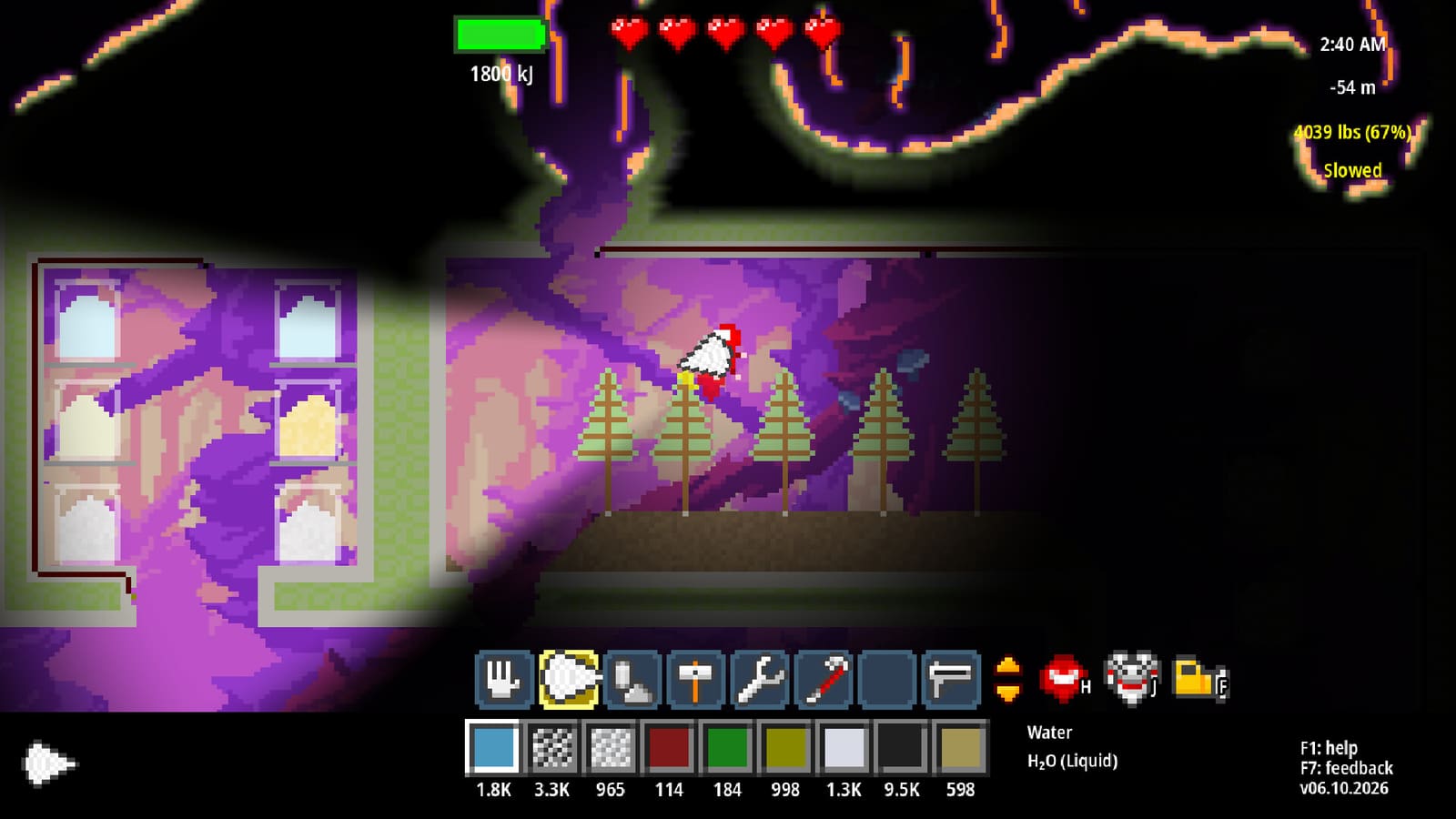
Materials as World State
Every mined block, poured liquid, and smelted bead changes the simulation. Wood burns into Charcoal when you stack and ignite piles correctly. Ores release metal when heat and reduction conditions are right. Acids dissolve specific minerals; the wrong acid on the wrong rock wastes time and feedstock. Because matter persists in the world, your factory is also your warehouse — plan floors, basins, and vents accordingly.
Discovery feeds the spaceship. When you isolate a new element, contribute pixels for Research Points and unlock craftable mechanical parts. Materials progression and ship progression are the same ladder seen from two angles. The Walkthrough pages tell you when to push; this overview tells you what the ladder is made of.
Hardness and Tool Gates
Drills and tools have hardness tiers. Soft surface dirt yields to a Plastic Drill; limestone caves and harder ores demand Wood, then Copper, then better alloys. If a vein refuses to chip, you do not need a secret recipe — you need the next drill from Tools. Bronze (Copper from Cuprite plus Tin from Cassiterite) is the classic mid-game hardness bump. Iron and Steel extend reach into stubborn rock.
Always carry a backup softer tool for delicate work and a harder tip for the target layer. Breaking into a cave with the wrong bit wastes fuel and time for nothing.
Heat, Fuel, and Containment
Temperature is a first-class resource. Charcoal from burned wood piles is the early forge fuel. Clay double-U forges keep heat around ore without smothering airflow; see Builds for geometry. Some reactions need extreme ranges: Aluminum reduction near 2300 K, Silicon from Sand plus Carbon around 2500–3000 K. Glass is simpler — melt sand — but still needs a stable hot pocket.
Containment matters as much as peak heat. Open melts splash; acid baths need basins; cooling arrays need space for Cooling Element structures that also harvest noble gases. Pair temperature control with the Reactions Cheatsheet when a recipe fails at the looks-hot-enough stage.
Surface, Cave, and City Sources
Rough source map for planning routes with the Map section:
- Surface: Wood from trees; Flint and Pyrite for Firestarter; Cuprite, Cassiterite, Hematite veins; coal-adjacent Mercury; sand for Glass and Silicon feedstock.
- Limestone caves: Rubies and harder ore access once drills allow entry.
- Buried City: Borax and advanced ruins loot that feed later chemistry.
- Engineered structures: Cooling Element arrays for noble gases; ship contributions for Research unlocks.
Silver and Gold arrive through Sylvanite. Lead follows Galena. Cobaltite, Chromite, Bauxite, Columbite, Vanadinite, Sphalerite, Lepidolite, and Fluorite appear as you push hardness and map coverage. Germanium is tied to mining Sphalerite. Lithium starts from Lepidolite. Tantalum and Niobium need the Columbite + HF pathway after you can make Sulfuric Acid (Sulfur + Water) and then HF (Sulfuric Acid + Fluorite).
Selection, Tracking, and UI
Press F1 for the Help System and Material Guide. Pin materials to sparkle-track deposits. Use Left-Ctrl as a pipette to select whatever pixel is under the cursor — faster than scrolling long lists while underground. Controller players map material slots on the D-pad; see Controls and Controller.
Material Tracking through fog of war turns exploration into a scavenger hunt with feedback. If sparkles never appear, you are in the wrong biome or your pin is a processed product instead of the ore form.
From Ore to Element Mentally
Think in pipelines:
- Gather — tree Wood, surface Pyrite/Flint, ore veins.
- Prepare — Charcoal fuel, clay forge, sand basins, acid baths.
- Transform — smelt Cuprite to Copper, Cassiterite to Tin, mix Bronze; Hematite to Iron; Carbon into molten Iron for Steel.
- Specialize — acids, HF etches, high-K reductions, cooling harvests.
- Contribute — ship element pixels for Research Points and automation parts.
Chromium illustrates multi-step thinking: Chromite to Ferrochrome, then Aluminum involvement to free Chromium. Aluminum itself is multi-step: Bauxite to Alumina, then carbon reduction at extreme heat. Rare pages detail those chains; this overview exists so you expect multi-step work instead of single-click smelts.
Linking Materials to the Rest of the Wiki
- Early Game Materials — survive and light the first forge.
- Ores and Smelting — copper through steel and glass.
- Rare Elements — HF, Al, Ta/Nb, nobles, lithium.
- Reactions Cheatsheet — compact recipe memory.
- Guides — forge, steel, electrolysis, automation tutorials.
- Builds — physical layouts that make reactions repeatable.
- Walkthrough — when to chase each tier.
- Tools — drill ladder and helpers.
- Controls — input habits that speed material work.
- Map — where biomes hide feedstock.
Practical Habits
Keep a surface depot of Wood, Charcoal, clay, and sand. Label basins for water, acids, and melts so you never pipette HF into a drinking reservoir by mistake. Before a rare dig, confirm drill hardness, fuel stock, and escape route. After each new element, update pins and decide whether the next Research unlock is worth the next dangerous recipe.
Atomcraft materials mastery is pattern recognition: same geology, hotter tools, cleaner separations. Use this overview as the mental model, then specialize with the sibling pages under Materials.
Frequently Asked Questions
Quick answers tied to this page.
Why will an Atomcraft ore not break?
Your drill hardness is too low. Upgrade along Plastic → Wood → Copper/Bronze → Iron/Steel using the Tools drill tier guides.
How does discovery progress Atomcraft?
Isolating elements lets you contribute pixels to the spaceship for Research Points that unlock mechanical pixels and automation.
What does Left-Ctrl do for materials?
Left-Ctrl acts as a pipette: sample a world pixel to select that material for tracking, placement, or tool use.
Are noble gases mined like Copper?
No. Harvest noble gases through Cooling Element structures and cooling arrays described in Builds and Rare Elements.
Where do I find Borax in Atomcraft?
Borax is associated with the Buried City; plan a mid-to-late expedition with adequate drills and supplies.